Learn more about California’s crop pollinators in this video of Project ICP partner, Claire Kremen and NY Times journalist, Mark Bittman! http://www.nytimes.com/2015/08/04/opinion/mark-bittman-whats-the-buzz-about-wild-bees.html?_r=0
Radio feature on Penn State partners!
Hear about the research being conducted by Project ICP partners at Penn State in the following radio piece: http://alleghenyfront.org/story/buzz-building-over-other-bees
Florida Melitto Files April-June Newsletter
Click here to learn about Florida native plants for wild and managed pollinators in the current issue of Florida Mellito Files from Project ICP partners at the Ellis Lab (University of Florida).
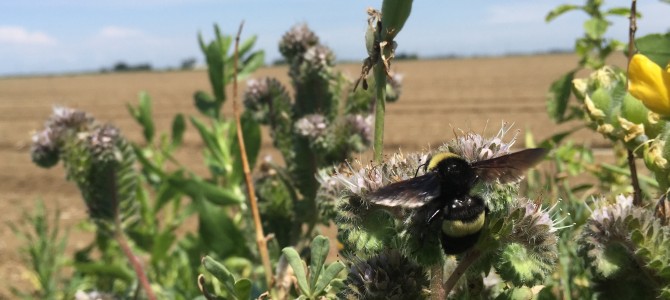
The real “busy bees”: A small subset of wild bees provide a large proportion of crop pollination
Project ICP researchers Rachael Winfree, Rufus Isaacs, Claire Kremen, Taylor Ricketts, Neal Williams, Elizabeth Elle, and Emily May, and ICP advisor Simon Potts, have co-authored a new meta-analysis published in Nature Communications exploring the contribution of wild bees to crop pollination across crops and…
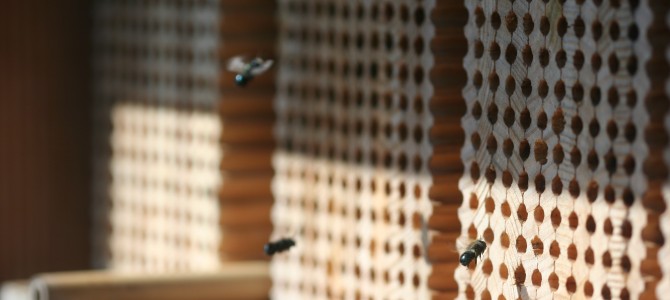
Gardening and Landscape Practices for Nesting Native Bees
Project ICP research partner Dr. Jim Cane (USDA-ARS, Logan, UT; Utah State University) has published a new four-page guide to supporting nesting bees in your garden or yard. The fact sheet describes simple landscaping and gardening practices that can provide essential nesting needs of…
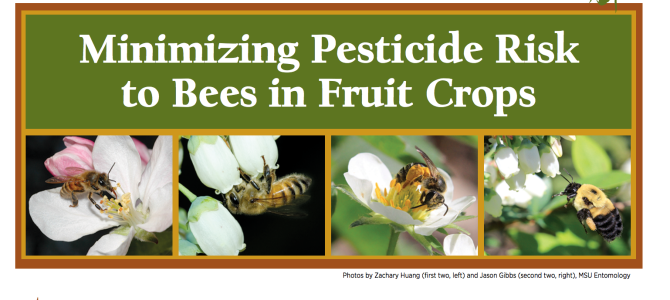
New MSU Extension Bulletin: Minimizing Pesticide Risk to Bees in Fruit Crops
Project ICP partners Emily May, Rufus Isaacs, and Julianna Wilson (Michigan State University), have authored a Michigan State University Extension guide, “Minimizing Pesticide Risk to Bees in Fruit Crops,” which outlines pesticide risks to bees on fruit farms and suggests best management strategies to minimize these risks. The…
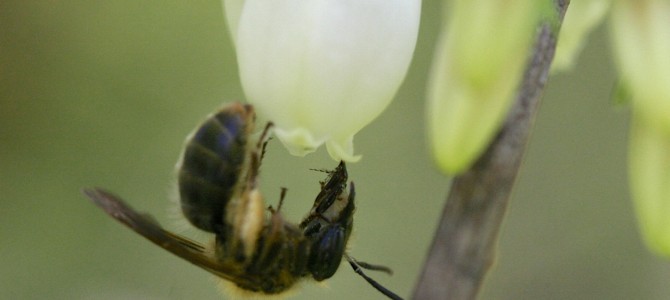
Pollinator Conservation Tactics for Organic Fruit Production
Conservation strategies for pollinators on fruit farms include: 1) ensuring access to flowering resources throughout the summer; 2) providing added nesting materials for above ground bees; and 3) reducing exposure to bee-toxic pesticides. To read more on pollinator conservation tactics…
NSF Graduate Student Research Fellowship
Charles Nicholson, a graduate student working for Project ICP and Taylor Ricketts’ lab, received an NSF Graduate Student Research Fellowship. Click here to read more about Charles’ accomplishment.
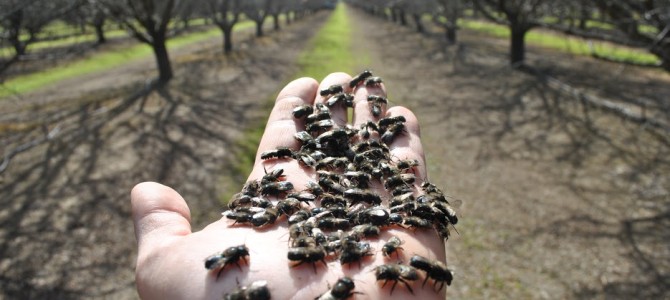
Blue Orchard Bee As Alternative Pollinator
Call it mason bee or blue orchard bee. Osmia lignaria is known by a few names, but it may soon be serving a singular purpose as a valuable alternative pollinator in almond orchards, particularly for smaller growers. Read more about…
Project ICP Communications Strategy
Project Integrated Crop Pollination is working across the country to reach our stakeholders. To read more about how our communications strategy works, see this document.